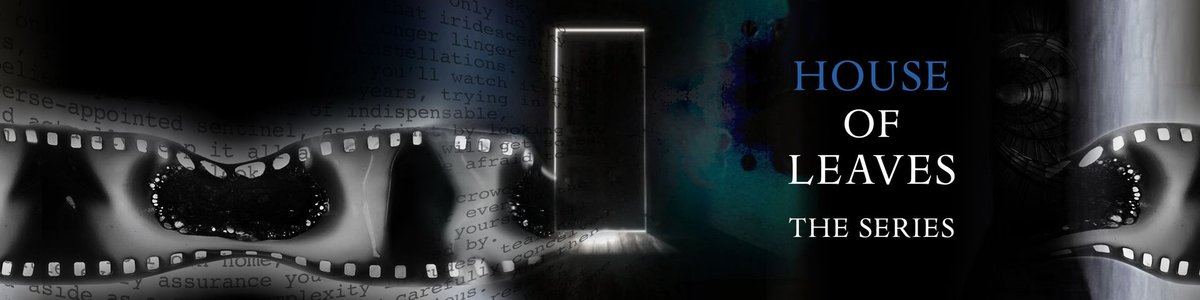
The labyrinthine pages of Mark Z. Danielewski's House of Leaves have captivated a fervent cult following for decades. It's a novel that doesn't just tell a story; it is an experience, demanding active participation from its reader. But for all its brilliance, the notion of adapting House of Leaves to film presents a unique set of thematic challenges in adapting House of Leaves to film that make it less a matter of "how" and more a question of "if it should even be attempted."
We're talking about a book widely considered "unfilmable," a label often thrown around but rarely so apt. The very essence of its horror, its philosophy, and its emotional weight is intrinsically tied to the act of reading, to the physical manipulation of the text, and to the reader's own psychological journey through its fragmented, shifting narratives.
At a Glance: Why House of Leaves Defies Easy Adaptation
- The Book is the House: Its experimental format (shifting fonts, colored text, footnotes within footnotes, manipulated page layouts) isn't just stylistic; it's central to the story's themes of perception and reality.
- Layered Narratives: The core story of the Navidson family's impossibly growing house is filtered through Zampanò's academic manuscript, then Johnny Truant's annotations and descent into madness, all intercut with letters from his mother. Untangling this for a visual medium is a monumental task.
- The Reader's Active Role: Much of the book's power comes from the reader piecing together its fragmented reality. Film, a more passive medium, struggles to replicate this engagement.
- Internal Horror vs. Visual Spectacle: Truant's psychological breakdown, a major thematic pillar, is an internal journey that's hard to externalize without losing nuance.
- Budgetary Black Hole: Translating such unique textual devices into innovative filmic techniques would be incredibly expensive for a project with niche appeal.
- Danielewski's Own Path: The author has explored episodic adaptations, hinting at a "sidequel" approach rather than a direct translation, acknowledging the format's inherent difficulties.
The Labyrinth on the Page: When the Medium Is the Message
To understand the challenge, you first have to grasp what House of Leaves actually is. On the surface, it's a postmodern horror story about the Navidson family, who discover their house is physically larger on the inside than the outside. A new, impossibly dark and cold space appears, shifting and growing, driving them to madness and obsession.
But this "surface" is merely the top layer of a literary lasagna. The book itself is presented as a sprawling academic manuscript by the late, blind Zampanò, analyzing a fictional documentary called The Navidson Record. This manuscript is then annotated by Johnny Truant, a troubled tattoo parlor apprentice who discovers Zampanò's work. Truant's own footnotes spiral into tales of his sordid life, his descent into obsession and madness, and his unraveling grip on reality. Interspersed throughout are heartbreaking letters from his institutionalized mother, Pelafina.
The physical book reflects this multi-layered narrative:
- Different Text Colors and Fonts: "House" often appears in blue, "Minotaur" in red. Zampanò's text, Truant's annotations, and Pelafina's letters each have distinct fonts. These aren't just stylistic choices; they guide the reader through the labyrinth of narratives and signal shifts in perspective, reliability, and emotional state.
- Footnotes within Footnotes: The text is riddled with references that demand constant page-flipping, some leading to other footnotes, some to appendices, some to blank pages, mirroring the labyrinthine nature of the house itself.
- Concrete Poetry and Distorted Layouts: As the characters explore the house, the physical text on the page distorts. Words run vertically, backwards, upside down, or are spread across multiple pages, sometimes forming visual shapes like staircases or corridors. This forces the reader to physically manipulate the book, to turn it, to slow down, to participate in the disorientation.
These formal experiments aren't window dressing. They are the bedrock of the novel's thematic explorations of reality, perception, the nature of storytelling, and the all-consuming power of obsession. The book doesn't just describe a haunted house; it actively haunts the reader through its format.
Why 'Unfilmable' Isn't Just Hyperbole: Core Thematic Hurdles
The label "unfilmable" sticks to House of Leaves because its deepest themes are inseparable from its literary form.
The Textual Maze as a Character: Replicating the Book's Physicality
How do you translate the experience of physically turning a book upside down to read a passage, or flipping frantically between pages to follow a footnote, into a passive viewing experience?
- Font, Color, and Layout Shifts: In the book, specific fonts and colors immediately signal who is speaking or which narrative layer you're in. Truant's text, often raw and erratic, contrasts sharply with Zampanò's academic tone. How do you visually represent this constant shifting of narrative voice without resorting to distracting, on-screen text overlays, or by sacrificing character development for stylistic gimmickry? A film would need to find entirely new visual language to convey these distinctions, perhaps through distinct cinematic styles, aspect ratios, or color palettes for each narrative thread, but maintaining coherence would be a tightrope walk.
- Concrete Poetry and Page Manipulation: The most literal challenge. A film cannot ask its audience to physically rotate their televisions or projector screens. This aspect, which forces the reader into the characters' disorientation, is crucial. Filmmakers would need innovative camera work, editing, and sound design to simulate that feeling of being lost and disoriented without relying on text. Think of disorienting angles, impossible architectural feats rendered through CGI, or editing that mirrors the reader's frantic search for meaning. But would it be as effective as the physical act?
Metafiction: Layers of Reality and Illusion
House of Leaves is a story about a story about a story. It constantly questions the nature of truth, documentation, and the stories we tell ourselves.
- The Navidson Record's Reality: The "documentary" is central, yet it's entirely fictional within a fictional book. How do you present a "found footage" element (the Navidson Record) that is itself a fabrication within the film's reality, without confusing the audience or undermining its impact? A director might choose to present The Navidson Record segments with a distinct visual style (e.g., grainy, lower quality footage), contrasting it with Truant's "reality," but the underlying thematic question of its authenticity would be harder to convey without Truant's explicit, doubting annotations.
- Narrative Reliability: Zampanò is blind, Truant is unhinged, and Pelafina is institutionalized. Whose perspective can we trust? The book masterfully uses their distinct voices and textual styles to create ambiguity. Film typically relies on visual information as truth, making it difficult to maintain this pervasive sense of unreliability. A cinematic adaptation would need to use unreliable narration visually – perhaps through distorted perceptions, subjective camera work, or carefully constructed ambiguity in character actions and dialogue – to keep the audience questioning what they're seeing.
- The Reader's Role: The book forces the reader to become a detective, piecing together fragments, deciding which voice to believe, and actively constructing meaning from the chaos. Film, by its nature, is a more passive medium, where the director largely dictates the experience. To preserve this interactive theme, an adaptation might experiment with non-linear storytelling, multiple perspectives, or even branching narratives (though the latter is more suited to interactive media like video games than traditional film). The sheer act of a character reading and reacting to text on a page doesn't translate easily to the cinematic experience.
Psychological Descent vs. Visual Spectacle
Johnny Truant's spiraling madness, fueled by Zampanò's manuscript and his own personal demons, is a central thematic current. His footnotes often read like stream-of-consciousness poetry, raw and unsettling.
- Internal Horror: The true horror of House of Leaves isn't just the impossibly growing house; it's the psychological toll it takes on those who encounter it, especially Truant. His obsession, paranoia, and mental breakdown are mostly internal, conveyed through his fragmented, increasingly erratic text. How does a film externalize this descent without resorting to cliché visual metaphors or heavy-handed exposition? A director would need actors capable of conveying immense internal turmoil, along with subtle visual cues that reflect his decaying mental state, rather than simply having him narrate his madness.
- Pelafina's Letters: These letters, written from a mental institution, offer a poignant counterpoint to Truant's narrative, revealing his mother's own struggles and hinting at inherited madness. They are deeply personal and textual. How do you integrate them meaningfully into a visual narrative without disrupting flow or reducing their emotional impact? Voiceovers might work, but would they capture the intimacy and stark contrast of reading her handwritten thoughts alongside Truant's chaotic annotations?
Danielewski's Own Vision: A Path Forward?
Author Mark Z. Danielewski himself recognizes these hurdles. In 2018, he penned a 62-page pilot script as an "experiment," and has continued adapting the book in an episodic format. His vision points towards a multi-season series, framed as a "sequel, or maybe a sidequel," suggesting a departure from direct adaptation.
- "Sequel, or Sidequel" Approach: This is a crucial distinction. Instead of trying to directly translate the book, Danielewski hints at expanding the House's mythology. Introducing new characters and showing the House's powers evolving beyond its original location – impacting events in Iceland or a VR game – sidesteps the most literal "unfilmable" elements by creating a new narrative inspired by the original's themes and concepts. This allows for cinematic freedom while staying true to the spirit of the original.
- Multimedia Affinity: Danielewski's background (his sister Poe released a companion album Haunted, his father was an avant-garde film director) suggests an inherent understanding of multi-modal storytelling. This might be why he's exploring an episodic format, which offers more room for narrative experimentation and allows for deeper dives into character psychology and thematic complexity over time, compared to a two-hour film. It could also allow for different visual styles or narrative devices to represent the various layers, like a TV show might use different directors or episode structures for specific arcs. You can learn more about these potential approaches and the overall development of an adaptation by looking into About the House of Leaves movie.
Beyond Direct Adaptation: Creative Solutions & Pitfalls
If a direct, page-for-page adaptation is impossible, what creative avenues remain open, and what dangers lie in wait?
New Filmic Innovations: What Would It Take?
A successful adaptation wouldn't just replicate; it would reimagine.
- Immersive, Non-Linear Storytelling: Imagine a series that constantly shifts perspective, even within scenes, or uses split screens and interactive elements (though the latter pushes into transmedia). The challenge is doing this without alienating a mainstream audience. David Fincher's Fight Club captured a sense of unreliable narration through visual trickery; House of Leaves would need that and more, consistently, for a much longer runtime.
- Visual Metaphors for Text: Instead of showing text, how can a film feel like the text? Perhaps Truant's mental state could be reflected in the film's very fabric – color saturation, sound design, camera stability, or the distortion of objects in his environment. The house itself could be a character rendered through architectural impossibility and shifting perspectives, rather than simply described.
- Sound Design as Narrative: The book is full of descriptions of impossible sounds emanating from the house. A film could lean heavily into an unsettling, multi-layered soundscape, using audio cues to represent narrative shifts or psychological states, much like the book uses visual text cues.
Cost vs. Niche Appeal: The Financial Hurdle
All this innovation comes at a price, and a steep one.
- "Very Strange and Very Expensive": This apt description highlights the core dilemma. To do House of Leaves justice cinematically would require significant investment in CGI, experimental filmmaking techniques, and a truly visionary creative team. Such a project would be a hard sell to studios primarily looking for guaranteed blockbusters.
- Niche Audience: While House of Leaves has a passionate cult following, it's not a mainstream phenomenon. The financial risk of a high-budget, avant-garde adaptation catering to a relatively niche audience is enormous, making it a tough pitch for any major studio.
The "Spirit" vs. "Letter" Debate: What to Keep, What to Sacrifice
This is the eternal question for any adaptation, but especially for one as formally unique as House of Leaves.
- Prioritizing Themes: Should an adaptation focus on the horror, the meta-commentary on media, the psychological descent, or the philosophical inquiries into perception? Trying to do justice to all might dilute the impact. A director would need to pick their battles, deciding which thematic elements are most crucial to the story they want to tell.
- Losing the Literary Core: Any adaptation, by definition, must translate from one medium to another. The risk is that in translating the story, you lose the very experience that made the book so profound. A film cannot be House of Leaves the book; it can only be a film inspired by it. The challenge is making that film equally resonant in its own medium. Finding the right balance will be key for any discussion About the House of Leaves movie or series development.
Common Questions About a House of Leaves Adaptation
The "unfilmable" tag generates a lot of speculation. Here are some common queries and our expert take.
Is House of Leaves truly impossible to adapt?
"Impossible" is a strong word, but "extremely difficult" and "financially prohibitive for a faithful adaptation" are more accurate. A direct, literal translation of the book's textual quirks to screen is likely impossible and would probably be unwatchable. However, an adaptation that captures its themes and spirit through innovative filmic language, perhaps even taking liberties with the original narrative structure (as Danielewski suggests), is a distinct possibility, albeit a challenging one.
What about an animated series? Could that work better?
Animation offers immense creative freedom, potentially allowing for more fluid transitions between narrative layers, abstract visual representations of Truant's madness, and stylized depictions of the house's impossible geometry. It could bypass some of the practical limitations of live-action (like expensive CGI for impossible architecture). However, it still faces the core challenge of translating the textual interaction and reader participation into a visual medium. While a strong option, it's not a magic bullet.
Could it work as an interactive experience, like a video game or VR?
This is perhaps the medium best suited to capture the experiential aspect of House of Leaves. A video game or VR experience could truly immerse players in the house's labyrinth, forcing them to navigate impossible spaces, make choices, and physically manipulate the narrative (e.g., "reading" documents, finding hidden clues). This could replicate the active participation the book demands. Indeed, Danielewski's mention of a "VR game called Harrow 5.5" hints at this very possibility, suggesting he's thinking beyond traditional film.
Why hasn't a major studio picked it up yet, given its cult status?
The combination of its perceived "unfilmability," the high budget required for a truly innovative adaptation, and its niche appeal makes it a difficult project for risk-averse studios. It doesn't fit neatly into established genres or financial models. It's the kind of project that requires immense creative courage and a willingness to gamble on something truly different.
Navigating the Uncharted Territory of Adaptation
The thematic challenges in adapting House of Leaves to film are less barriers and more invitations for radical creativity. This isn't a book that can be simply translated; it demands to be reimagined.
Any filmmaker or studio brave enough to tackle House of Leaves must accept that the final product will, by necessity, be a different beast from the book. The goal shouldn't be a direct translation but a new artistic work that channels the original's unsettling essence and thematic depth through the unique grammar of cinema. It would require a director with a profound understanding of experimental storytelling, a willingness to push boundaries, and perhaps most importantly, the humility to understand that the book's greatest strengths are its literary ones.
Whether as a groundbreaking film series, an innovative animated project, or a truly immersive interactive experience, the journey to adapt House of Leaves will be as labyrinthine as the novel itself. But for those willing to venture into the impossible spaces, the rewards – a truly unique piece of storytelling – could be immense. For more details on the ongoing discussions and developments, keep an eye on news related to About the House of Leaves movie.